
If you run a commercial kitchen, you should have some knowledge of how range or exhaust hoods are installed for proper ventilation.
Call APS-Hoods for a free estimate on your Commercial Kitchen Hood Cleaning Kitchen Exhaust Cleaning needs.
Planning and Preparation
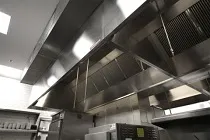
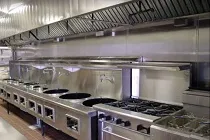
All commercial kitchens are not the same. Before the range hood installation is carried out, the facility managers need to consult with hood builders and contractors to develop an effective plan for the project. At APS Hoods, we design an array of range hoods to suit the specific needs of a large kitchen or a commercial food service facility. From hood schematics to specifications and assembling of all the hood components, all the crucial details need to be planned in an accurate manner. If the planning is not correct, the quality of the installation will not be perfect. Poorly designed and installed range hoods will not deliver the results as per your expectations. When it comes to preparation, it is crucial to determine the need for sturdy structures to support the weight of the hoods. So, specialists will inspect the location of the hood installation and evaluate whether there is a need to install additional structures to set up the range hoods. According to the guidelines put forth by the National Fire Protection Association, installers will need to leave adequate gaps or clearance between the range hood, exhaust ducts, and the construction materials. Professional range hood installation is performed in accordance with the building codes. The entire project is carried out as per the ventilation hood diagram. The installation of commercial range hoods involves several essential steps, each of which should be followed correctly. Professionals make sure the entire procedure is performed in an error-free manner.
Safety Codes:
During the installation, the utmost priority is to ensure the safety of the workers. Range hood contractors execute the project while adhering to the safety codes outlined by the concerned authorities. Professionals use proper gear and tools to minimize the risk of physical injuries.
Range Hood Diagram:
After the ventilation hood parts have been unpacked, a review will be conducted to see to it that all the components are in good shape and there is no damage. The professional will check out the hood assembly and get started with the installation as per the diagram. The hood diagram includes all the details of the project as it was planned.
Hood Position:
The installation manual contains crucial details in regard to how the range hood will be hung and supported. The installation process will be executed in a careful manner while making sure that adequate support is available to hold the weight of the hood weight. Here, the contractor may also need to make some adjustments to properly set up the hoods.
Elevate Hood Bottom:
In compliance with the national and local codes, the installation specialists need to raise the bottom of the range hood a few feet from the ground. If this criterion is not fulfilled, the codes will be violated. High lifts are employed to lift the hood for accurate positioning. Again, this will be done as per the details mentioned in the range hood diagram.
Duct Welding:
The installation manual has all the details about the installation of the duct-work. This is an important step of the entire hood installation process. The welding of the ducts is a job that requires a great deal of precision. Professionals perform the task while leaving no gaps or leaks. Leakage in the ductwork pipe can cause multiple problems in the future.
Other Installations:
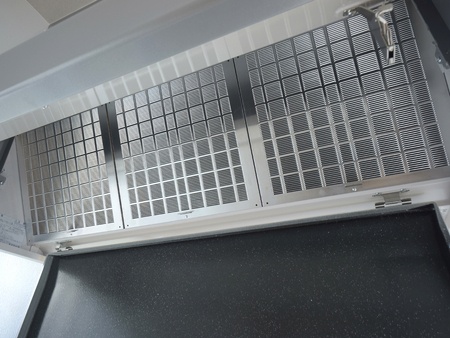
The range hood setup involves the installation of grease filters, grease cups, and lighting. Once the ventilation hood has been installed and positioned, these smaller installations will follow. The installation of a commercial range hood is an elaborate process. Apart from what you read above, there are many other details that the entire procedure involves. From hanging the range hood to drilling and securing the threaded rods, installers have to focus on each task with great attention to detail. If you plan for the hood installation to be performed in a correct manner while abiding by all the safety and building codes, you should hire only the experts.
Factors to Consider for Hood Installation
Before the range hood installation can begin, it is extremely important to ensure all the electrical components are in proper order. Also, commercial kitchen hoods should vent outside of the building. If the hoods vent inside of the building, in the ceiling, or in the basement, the risk of fire accidents will increase manifolds. In fact, in the event of a fire breakout, there will be great damage to property and assets. That is why you should only rely on professional contractors for the range hood installation. The cost of range hood installation depends on the type or style, materials used, and the location of the commercial kitchen. Usually, you can expect contractors to finish the project in around a day.
Hire a Professional Range Hood Installation Company
From selecting the right type of range hood for your commercial kitchen to getting the installation done in a swift and correct manner, APS Hoods has a successful track record spanning over two decades. If you have a question or want some more clarity on any particular aspect of the procedure, you should feel free to consult with one of our hood installation specialists. For your free consultation and quote, you can give our office a phone call or write us an email using the contact form. Some related Posts:
- Restaurant Cleaning Services: Commercial Kitchen Appearances Matter – The Importance of a Pristine Exhaust Hood Finish | Denver
- Hood Exhaust Cleaning Kitchen Maintenance Best Practices for Busy Restaurants
- All You Need to Know About Restaurant Hood Maintenance to Protect Your Investment
Contact Us
Frequently Asked Questions
How do you install a hood fan?
Commercial kitchens have to abide by strict ventilation rules to ensure the air remains safe and breathable for staff and customers. Your ventilation system is intricate and involves the ventilation hoods that are located over your appliances, the accompanying grease ducts, and the fan on your roof. Installing a roof fan can be complicated and is best left to the professionals. If you get something wrong, not only could it prove to be expensive to fix, and lead to poor air quality, but you may also void the warranty on your equipment. Contact APS-Hoods instead. We can install your roof for a fair price and on your schedule anywhere in Denver, Colorado.
Are range hoods hardwired?
Not necessarily, though hard-wired range hoods are the preferred method approved by all building codes and the method used by all professional installers.
Are ductless range hoods effective?
We do not recommend ductless range hoods for the commercial kitchen environment. This is due to the fact that ductless hoods tend to recirculate the foul air back into the kitchen as opposed to venting the foul air outside. Not only can this lead to smoke and impurities finding their way into the air your staff and customers breathe, but your kitchen could get awfully humid. For all commercial kitchens, we recommend vented range hoods. Make sure you change the filters in your hoods every three to six months to keep them working as intended.
Contact Us
Get a Free Quote Today — No Obligation
Denver's most trusted commercial kitchen service team is ready to help. We respond fast, work around your schedule, and guarantee every job.
- ✓Same-week service — we work around your hours
- ✓100% satisfaction guarantee — or we come back for free
- ✓Certified technicians — NFPA-compliant, licensed & insured