
National Hood Cleaning Company Promotes Planning Prior to Hood System Installation
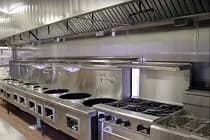
December 7, 2007—Denver, Colorado— A national hood cleaning and installation company wants to see changes in the way hood systems are installed in restaurants.Nationwide Fire Protection Corp. in Denver wants restaurant owners to be more diligent in ensuring hood systems are installed in a manner that makes it easier for the systems to be properly maintained and cleaned for fire protection purposes.
Doing so might mean rewriting building codes and involving local building inspectors and firefighters in ensuring the systems are accessible, said Massoud Farazandeh, general manager of Nationwide Fire Protection Corp., an affiliate of American Professional Services (APS-Hoods).
“I am an installer of hoods, ducts fans and other mechanical rooftops, as well as fire suppression systems and fire alarms,” Farazandeh said. “Because we are one of the few companies who install, repair, service and clean the systems, we have the whole process in mind during installation.”
Unfortunately, not all installers look at the whole picture, Farazandeh said, and building inspectors often don’t think about that, either. The result is that access to the roof or equipment that must be cleaned and maintained can be difficult to reach. Inside ladders often are dangerous and tend to be “in the worst possible section of the building.”
“Qualified hood cleaning companies should be involved in the installation process so they can provide input on where access panels should be placed,” he said.
Effective Installation
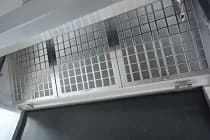
Farazandeh has some tips on installing hood systems effectively. Access panels should be placed at least every 10 feet on horizontal duct lines, and they should be placed at every 90-degree angle.
Ducts should be properly welded to prevent grease leaks. Leaked grease can cause fires if a spark occurs nearby, Farazandeh said.
Although building codes require fire wrap covering over the entire system, including access panels, it isn’t necessary on the panels.
“Access panels manufactured today are fire-resistant up to 2,000 degrees minimum,” he said. “It’s a fire preventive device itself. But because many inspectors don’t understand the concept of these components, they enforce codes that aren’t necessary.”
No pipes or wiring should be placed within three feet of access panels, Farazandeh said. Doing so makes it difficult for cleaning and maintenance crews to gain access to properly perform their work.
Restaurant owners also should install hinges on all exhaust fans.
“Exhaust fans are heavy,” Farazandeh said. “They have to be lifted and taken down. Being able to swing them down with a hinge makes cleaning easier.”
Ensuring Proper Installation
Restaurant owners can ensure hood systems are installed in a manner that makes cleaning and maintenance easier by seeking out a company that installs as well as cleans the systems.
“This way, it is safe to assume that they have cleaning and maintenance in mind during the installation process,” Farazandeh said.
The best thing would be for city and county building departments to be involved in oversight, but “lacking that, owners should be diligent,” he said.
Many restaurant owners view maintenance and cleaning of hood systems as a janitorial issue. It should be considered a fire prevention and safety issue.
“Whatever can be done to make the cleaning and maintenance process easier means that when those processes done, they can be done more effectively,” Farazandeh said. “Clean hood and duct systems can prevent fires from causing extensive damage.”
These are concepts Farazandeh has attempted to bring attention to for a long time, he said. Each time his company cleans a system, he prepares a report to the restaurant owner or manager that sites potential safety and fire hazards. However, there is no governing authority in place to ensure those hazards are addressed.
“We’re looking for ears to hear us,” Farazandeh said. “There may not be a lot of money in enforcing the things I’ve mentioned, but there’s protection of life and property in it.”
If there was a system where hood cleaning companies could fax a report after each cleaning and be overseen until corrections are made. All of this wouldn’t take more than one person in the state. This could be regulated and could save life and property.
For more information about restaurant hood systems and hood cleaning, contact APS-Hoods, (303) 639-9399, or visit the company’s Web site: www.aps-hoods.com.
About APS-Hoods
APS-Hoods is a full-service restaurant fire protection business that installs, services, repairs and performs routine inspections and cleaning for hood and fire suppression systems. Founded by Chief Executive Officer Massoud Farazandeh in 1989, APS-Hoods has grown into a national leader in hood cleaning and fire protection for restaurants and facilities.
APS provides superior service, a quality guarantee and maintains a highly qualified and dependable staff. All crew members are professionally trained to comply with the National Fire Prevention Association Standards and state and local codes. APS-Hoods is fully insured and bonded. They are licensed in the mechanical and electrical fields, as well as fire protection contracting.
APS-Hoods is affiliated with the National Fire Protection Agency and the Colorado Division of Fire Safety Fire Suppression Program.
© 2007 Sinai Marketing and APS-Hoods. Authorization to post is granted, with the stipulation that Sinai Marketing is credited as sole source. Linking to other sites from this article is strictly prohibited, with the exception of herein imbedded links.
-end-